Smart Manufacturing and AI: Training Skilled Workforce and Technology Trends
Welcome to PyGeek 2026!
Topics: LLM | Multimodal Computing | Agent-based AI

Discover PyGeek in 90 Seconds
Official Conference VideoThis video was created by the PyGeek organizing committee using ChatGPT and Google Veo.
The PyGeek 2026 International Conference brings together researchers and top industry experts at the heart of Python's fast-rising ecosystem. With Python users and developers growing at an unprecedented pace, PyGeek showcases the language's evolution and its expanding application landscape across science, engineering, and industry.
This year's program centers on Large Language Models, Multimodal Computing, and Agent-based AI—from foundations and systems to tooling, evaluation, and real-world deployment.
Expect three days of academic presentations, industry seminars, hands-on workshops, and structured social networking designed to connect Python users, developers, and leaders from research and practice.
Join us on Wednesday-Friday, August 19-21, 2026 at Hongik University, South Korea. We look forward to welcoming you on site.
Prof. Giseop Noh, General Chair
Organized & Hosted By
The 2026 PyGeek Conference is jointly organized and hosted by DeepShark Research Lab, the Industry-Academic Convergence Talent Center (ICTC) at Hongik University, and Henan University of Engineering, China.


Steering Committee
General Chair

Co-Chairs


TPC Members
Academic Members
- Prof. Chaeyun Seo, Hongik University
- Prof. Hayoung Oh, Sungkyunkwan University
- Prof. Young-myoung Kang, Sungkyul University
- Prof. Soocheol Lee, Korea National University of Transportation
- Prof. Kyu-haeng Lee, Dankook University
- Prof. Sangsoon Lim, Chung-Ang University
- Prof. Dooyoung Kim, R.O.K Naval Academy
- Prof. Janghwan Kim, Hongik University
Industry Members
- PhD, Jaehoon Lee, Samsung SDS
- PhD, Sihyun Jeong, Samsung Research
- PhD, Taemin Park, Intel
- Junsoo Lee, ETRI
- Seugwhan Baek, SAP R&D Center
- CEO, PhD, Sangwon Ko, Marketian C&E
- CEO, PhD, Moonjung Choi, Exercowork
- PhD, Onyou Kang, SK Telecom
- PhD, Jihyun Park, Naver Research
- Team Lead. Sangmin Park, Chungbuk Energy Institute for Industry-University Convergence
AI-technology Convergence Members
- Prof. Hyunjin Kim, Smart Welfare Systems, Cheongju University
- Prof. Dongkyun Lim, Avionics & AI, Cheongju University
- Prof. Jongsun Lee, AI-based Design, Cheongju University
- Prof. Hunil Kim, Sports & AI Convergnece, Cheongju University
- Prof. Jeongho Moon, Unmanned A/C in AI, Cheongju University
- Prof. Sungbok Chang, AI-powered Digital Contents, Cheongju University
Main Theme & Topics
Including but not limited to
- The Convergence of Smart Manufacturing and Artificial Intelligence: Latest Technology Trends and Industrial Applications
- The Role of AI and Deep Learning in Smart Manufacturing
- Latest Technology Trends to be Covered by the PyGeek Conference
- Real Industrial Applications and Achievements
- Educational Programs and Collaboration Models for Training Smart Manufacturing Workforce
- Overview of Educational Programs under the Advanced Human Resource Development Project for Smart Manufacturing
- Collaboration Models between Universities, Industries, and Public Institutions
- Smart Manufacturing in the Digital Transformation Era: Challenges and Opportunities
- Impact of Digital Transformation on Manufacturing
- Role and Opportunities of the Advanced Human Resource Development Project for Smart Manufacturing
- Dx Digital Convergence, Smart Manufacturing, and AI
- Deeplearning in Academic & Industry Fields
- Recent Development Technology Stacks
- Python Powered Algorithms & Implementations
Program Schedule
Download PDFThe conference spans three days, from Wednesday, August 19 to Friday, August 21, 2026.
Day 1: Wednesday, August 19 - Foundations & Systems
| Time | Session | Topic | Presenter |
|---|---|---|---|
| 13:30 - 15:00 | 📚 Workshop | Workshop on LLM fundamentals and advanced Python for AI. | Pre-registered workshop panel only. |
| 15:00 - 15:30 | ☕ Coffee Break | Have a fun! And Socials | N/A |
| 15:30 - 17:00 | 🧠 Industry & Academic Joint Seminar | Industry & Academic Joint Seminar for Collaborative Team Building and Create Things to Go | Only pre-registered industry, society VIP members. |
| 17:00 - 18:00 | Administrative Meeting | Steering Committee Meeting for Final Review for Conference States | Steering Committee, and TPC members |
| 18:00 - 20:00 | 🍻 Dinner | Networking and Social Event near Conference Venue (TBA) | Those wishing to attend |
Day 2: Thursday, August 20 - Multimodality & Agents
| Time | Session | Topic | Presenter |
|---|---|---|---|
| 09:50 - 10:00 | 💼 Opening Remarks | Wecome & Hello Message, Daily Orientation | Giseop Noh, General Chair |
| 10:00 - 10:20 | 🚀 Keynote 1 | From Crude Oil to Intelligence | Medical Dr. Sangwon Ko |
| 10:20 - 10:40 | 🚀 Keynote 2 | AI Agentification over Wireless Networking: The Future of Autonomous Networks Driven by 6G and Decentralized Edge Intelligence | Prof. Byung-Seo Kim |
| 10:40 - 11:00 | 🧠 Technical Session #1 | BOARS: Development of an AI-Based Real-Time Wild Boar Integrated Control System | Prof. Hyunjun Park (Korea Maritime & Ocean University) |
| 11:00 - 11:20 | 🧠 Technical Session #1 | Changes in Engineers' Job Competencies in the AI Era | Prof. Heungseob Kim (Changwon National University) |
| 11:20 - 11:40 | 🧠 Technical Session #1 | Formalizing Energy-Safe Inference Scheduling for Physical AI under Non-stationary Energy Harvesting | Prof. Young-myoung Kang (Sungkyul University) |
| 11:40 - 12:00 | 📄 Oral Presentation #2 | A Co-evolutionary Strategy of AI Technology for Expanding Regional Industrial Value Chains | PhD. Candidate, Eujung Kim (Industry-academic Convergence Talent Center, Hongik University) |
| 12:00 - 13:30 | ☕ Lunch Break | Eat first. Solve AI later. 😄 And lunch is on... you! | Mission: Find food. Objective: Return before 1:30 PM |
| 13:30 - 13:50 | 🧠 Technical Session #2 | Research on Mission-Driven Intelligent AI Agents: From Defense Mobility to Sports Science | Prof. Youngsoo Kim (Jeonju University) |
| 13:50 - 14:10 | 🧠 Technical Session #2 | Development and Application of AI Solutions in the Semiconductor Industry | Mr. Seungwon Seo (GSFSolution) |
| 14:10 - 14:30 | 📄 Oral Presentation #1 | A Factor Decomposition Method for Separating Store Substitution and Embedding Placement Effects in Vector Database Migration | Prof. Sangsoon Lim et. al. (Chung-Ang University) |
| 14:30 - 14:50 | 📄 Oral Presentation #1 | Multi-scale Temporal-aware Text-Enhanced Network for Multimodal Sentiment Analysis | Prof. Junjun Zhang (Henan University of Engineering) |
| 14:50 - 15:20 | ☕ Coffee Break | Have a fun & enjoy networking! | - |
| 15:20 - 15:40 | 📄 Oral Presentation | Distinguishing Professional and Amateur Piano Performances using 2D Audio Features and Convolutional Neural Networks | Prof. Changheun Oh (Hongik Unviersity) |
| 15:40 - 16:00 | 🧠 Technical Session #1 | Are AI Agents Tools or Agents? A Shift in Human-Machine Relationships | Prof. Hayoung Oh (Sungkyunkwan University) |
| 16:00 - 16:20 | 📄 Oral Presentation #2 | Marine Snow Removal in High-Resolution Underwater Videos Using U-Net Segmentation and Inpainting | Mr. Junggyu Park (Hongik University) |
| 16:20 - 16:40 | 📄 Oral Presentation #2 | Semantic Cohesion Analysis of the Chunk of Code with an LLM | Ms. Eunjin Jeong (Hongik University) |
| 16:40 - 17:00 | 📄 Oral Presentation | A Self-RAG-Based Triple Factuality Verification Pipeline for Local LLM KARMA | Mr. Seung-gyeom Kim (Hongik University) |
| 17:00 - 17:20 | 📄 Oral Presentation | Automatic Generation of Emotion Retrospective Content Based on Generative AI | Ms. Jun Sun Chang (Hongik University) |
| 17:20 - 17:30 | 🏁 Daily Closing Remarks | Briefly introduce tomorrow's schedule and provide an overview of the evening social networking banquet. | Giseop Noh, General Chair |
| 18:00 - 21:00 | 🍻 Conference banquet | No slides, no equations—just conversations, food, and new connections. | If you're free, hungry, or just curious—come join us! ⭐ |
Day 3: Friday, August 21 - Applications & Future Directions
| Time | Session | Topic | Presenter |
|---|---|---|---|
| 10:30 - 12:00 | 📚 Academy workshop | The Business of AI: From Research to Revenue. | Academic Leaders & Students |
| 12:30 - 13:30 | ☕ Lunch Break | - | - |
| 13:30 - 14:00 | 🏁 Closing Remarks | Summary and Future of PyGeek. | Prof. Giseop Noh, General Chair |
| 15:00 - 16:00 | Steering Committee Meeting | Quick Review Board | TBD |
Keynote Speakers
We are honored to have the following distinguished speakers for our keynote sessions.
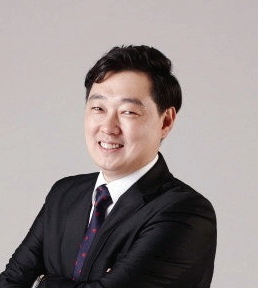
- Experience
- CEO, Marketian (Current)
- Adjunct Professor, Graduate School of Medicine, CHA University (Current)
- Former Chief Executive of Management Division, Kwangdong Hospital
- Former Vice President, K-DOC
- Former GL&S Korea Manager, Pfizer Korea
- Former Senior Consultant, Gallup Korea Consulting
- Former Team Leader, Healthcare Information Systems Development Team, Hallym University Medical Center
- Academic Records
- M.Ph.D. in Medicine, CHA University
- M.M.S. in Marketing, University of Colorado Denver
- M.B.A. in Accounting, Dongguk University
- Abstract
This keynote examines the fundamental challenges and opportunities facing computer science education and software professionals amid the rapid paradigm shift from the analog era through digital transformation to the emerging Intelligence Economy. Drawing parallels with the rise and decline of past industries and academic disciplines, the talk explores how the widespread adoption of Generative AI has significantly reduced the scarcity value of programming syntax itself. As the world transitions from the 20th-century paradigm of oil refining to the 21st-century era of “intelligence refining” powered by computing resources, developers must evolve beyond the role of coders to become architects of systems and definers of problems. The lecture highlights how value creation is increasingly driven not by writing code, but by identifying meaningful problems, designing intelligent systems, and orchestrating AI capabilities. Through practical industry cases and real-world examples, the speaker will present five actionable principles that professors of artificial intelligence, computer science students, and industry professionals can immediately adopt to secure competitive advantages in the age of AI-driven transformation.
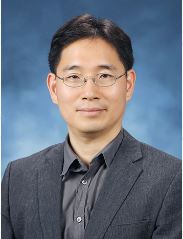
- Experience
- Motorola Korea Ltd. Korea, Computer Integrated Manufacturing Engineer in Advanced Technology Research and Development
- HQ of Motorola Inc., Schaumburg Illinois, Senior Software Engineer in Networks and Enterprises.
- Chairman of the Dept. of Software and Communications Engineering, Vice President of Graduate School, and Director of Planning & Management Office at Hongik University, Korea, where he is currently a professor since 2007.
- Adjunct professor of TDTU, Vietnam from 2023.
- IEEE Senior Member and is serving as Associate Editors of IEEE Access, Telecommunication Networks, IEIE SPC, and Journal of the Institute of Electrics and Information Engineers.
- Guest Editors of special issues of IEEE IoT, IEEE OJCS, IEEE Access, International Journal of Distributed Sensor Networks, Sensors, Applied Science, and Electronics. He served as an organizing chair for ICGHIT 2024 & 2025.
- Academic Records
- B.S. degree in Electrical Engineering, In-Ha University
- M.S. and Ph.D. in Electrical and Computer Engineering, University of Florida
- Abstract
The explosive growth of 6G networks and the Internet of Things (IoT) has ushered in the era of 'Edge Intelligence,' shifting data processing from centralized clouds to the network edge. However, conventional edge AI systems still rely on static models and lack the autonomy required to dynamically adapt to rapidly changing wireless environments. This keynote presentation introduces a revolutionary paradigm to overcome these limitations: 'Agentic AI' and its implementation process, Agentification. Agentification represents a profound shift that transforms passive edge devices and network nodes into autonomous agents capable of perceiving multi-modal environments (Perception), understanding complex contexts (Reasoning), and executing self-directed workflows to achieve specific goals. In this talk, we delve into the four core pillars for building practical and scalable Agentic AI systems within resource-constrained 6G edge environments: Compactness, Efficiency, Knowledge & Reasoning, and Migration. Furthermore, we showcase how agentified edge intelligence maximizes network efficiency and operational autonomy through some real-world case studies. Ultimately, this keynote envisions a future where edge computing transcends merely running pre-trained AI models to becoming a unified, self-evolving system-Edge General Intelligence-offering deep insights into the key enabling technologies, structural designs, and future research directions for next-generation autonomous networks.
Call for Papers
We invite submissions of high-quality, original research papers for PyGeek 2026. All accepted papers will be presented at the conference.
Important Dates
| Event | Date |
|---|---|
| Paper Submission Deadline | Aug 1, 2026 |
| Notification of Acceptance | Aug 15, 2026 |
| Camera-Ready Deadline | Aug 22, 2026 |
Topics of Interest
Topics of interest include, but are not limited to:
- Foundational Models (LLMs, Multimodal Models)
- Agent-based AI and Human-Computer Interaction
- Efficient AI Systems and Infrastructure
- Generative AI and Creative Applications
- AI Applications (Healthcare, Finance, Robotics, etc.)
- Evaluation, Ethics, and Safety of AI Systems
- Python for Scientific Computing and Data Science
- Developer Tools and Frameworks for AI
Submission Guidelines
Submissions must be original and should not have been published previously or be under consideration for publication while being reviewed for PyGeek. Papers should be formatted according to the official conference template (up to 8 pages, excluding references). The review process will be double-blind.
For detailed formatting and reference rules, see Author Guidelines.
Template Downloads
- Review Template: DOCX / PDF
- Camera-ready Template: DOCX / PDF
- Full guideline: Author Guidelines
PyGeek 2026 Awards
PyGeek recognizes outstanding research contributions and excellence in communicating research outcomes.
View Award DetailsRegistration
Please, register to PyGeek conference.
We will send program updates via email.
| Status | Name | Type | Date | |
|---|---|---|---|---|
Venue
Address of Conference
Conference Hall, 2nd Floor of WoW Building, Hongik University
94, Wausan-ro, Mapo-gu, Seoul, Republic of Korea (04066)
Parking Area: available in around the building
We recommend that visitors may use excellent public transportations.


Map Location
Contact Us
If you have any questions, please contact us at kafa46@hongik.ac.kr